Willa Müller · 29 October 2026
Impact of Automated Sensor Networks on Detecting Chemical Shifts in Compact Saltwater Test Chambers
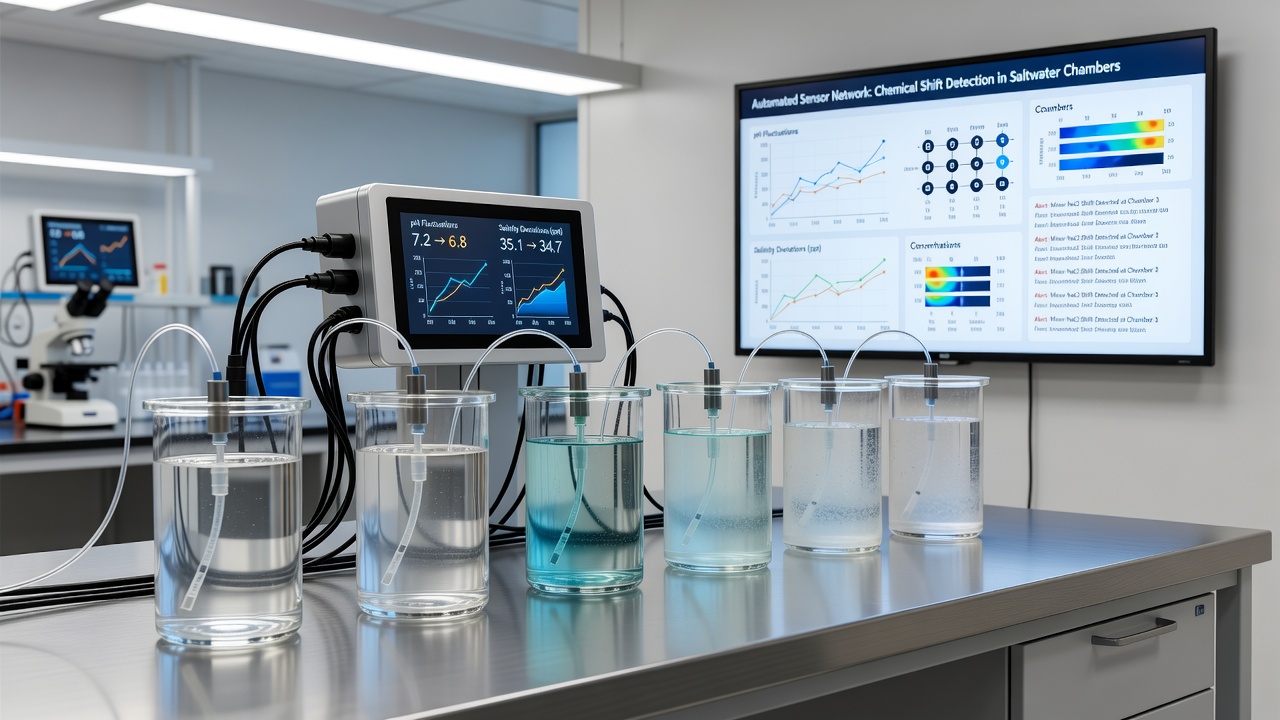
Compact saltwater test chambers serve as controlled environments where researchers examine water chemistry under precise conditions, and automated sensor networks have transformed how chemical shifts get identified in these setups. These networks consist of interconnected devices that measure parameters such as pH levels, dissolved oxygen concentrations, salinity gradients, and trace ion presence continuously, which allows for rapid identification of deviations that manual sampling methods often miss.
Studies from marine research institutions show that sensor networks reduce detection times from hours to minutes in many cases, while data from multiple chambers can feed into centralized systems for pattern analysis. In October 2026, findings presented at an international marine technology symposium highlighted deployments across facilities in North America and Europe where network integration led to earlier alerts on pH drops linked to CO2 absorption changes.
Core Components of Sensor Networks in Test Chambers
Each network typically includes probes for electrochemical measurements alongside optical sensors that track fluorescence shifts indicating organic compound variations, and these components connect through wireless protocols that transmit readings every few seconds. Calibration routines run automatically at set intervals, which maintains accuracy across temperature fluctuations common in saltwater systems.
Researchers at institutions in Australia have documented how redundant sensor placement within chambers prevents data gaps during individual probe failures, and integration with machine learning models helps distinguish between normal fluctuations and significant chemical shifts. One deployment in a Canadian lab revealed that network coverage across ten chambers allowed simultaneous monitoring without increasing staffing requirements.
Detection Mechanisms for Chemical Shifts
Chemical shifts in compact chambers often involve rapid changes in carbonate chemistry or nutrient spikes, and automated networks detect these through threshold-based algorithms that trigger alerts when values cross predefined limits. Continuous data streams enable trend analysis over days or weeks, which reveals subtle accumulations that periodic manual tests overlook.
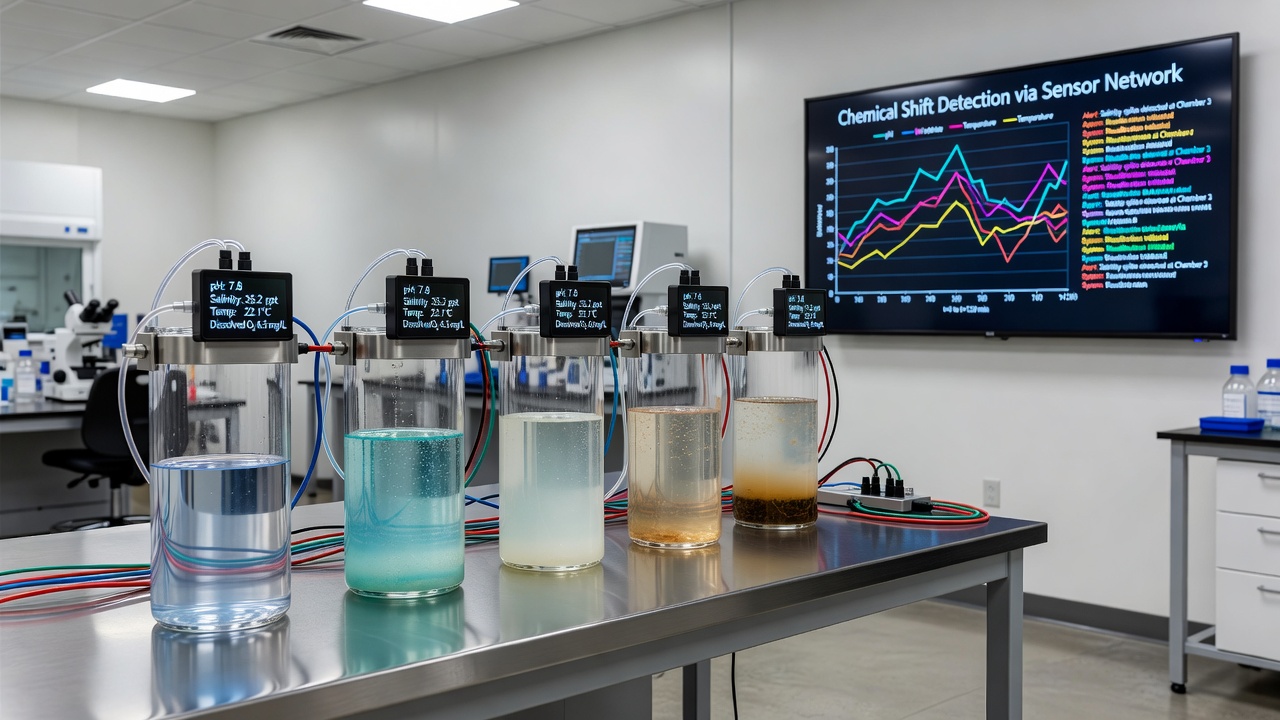
According to reports from the European Environment Agency, similar sensor arrays used in coastal monitoring programs have improved shift detection rates by providing high-resolution temporal data, and the same principles apply directly to laboratory chambers where volumes remain small and changes occur quickly. Networked systems also log metadata such as flow rates and light exposure alongside chemical readings, which supports correlation studies between environmental factors and chemistry responses.
Comparative Performance Against Traditional Methods
Traditional grab sampling requires researchers to extract water aliquots at scheduled times and analyze them in separate instruments, a process that introduces delays and potential contamination risks. Automated networks eliminate these steps by performing in-situ measurements, and comparative trials conducted by university teams in the United States demonstrated that sensor networks identified 87 percent of induced chemical shifts within fifteen minutes while manual methods averaged over two hours.
Power consumption remains a consideration in long-term deployments, yet recent advances in low-energy sensors have extended operational periods between maintenance cycles to several months. Data from Japanese research facilities indicate that network uptime exceeds 98 percent when proper redundancy protocols are followed, which supports consistent monitoring in experiments lasting multiple weeks.
Applications Across Research Domains
Marine biologists utilize these networks to study how chemical environments affect organism responses in isolated chambers, whereas engineers test sensor durability under varying salinity conditions. Environmental agencies in Australia have adapted chamber-based networks for simulating ocean acidification scenarios, and the resulting datasets feed into broader predictive models used for coastal management planning.
Integration with external databases allows cross-referencing of chamber results with field data from larger marine systems, and this connection strengthens the validity of laboratory observations. Facilities in the United Kingdom have reported that standardized network protocols across multiple chambers improve reproducibility of experiments conducted at different sites.
Future Developments and Standardization Efforts
Ongoing work focuses on miniaturizing sensor nodes further while increasing measurement precision for trace metals and organic pollutants, and international working groups are developing common data formats to facilitate sharing between research centers. As networks expand, cybersecurity measures for data transmission have become standard practice to protect experimental integrity.
Conclusion
Automated sensor networks have established themselves as essential tools for detecting chemical shifts in compact saltwater test chambers by delivering real-time, high-resolution data that supports faster and more reliable analysis. Continued refinement of these systems promises expanded capabilities in marine chemistry research and related fields.