Ben Flores · 3 September 2026
Examining Bacterial Influences on Skeletal Formation in Isolated Marine Microhabitats
Isolated marine microhabitats such as small reef crevices, sediment pockets, and enclosed lagoon basins create distinct chemical gradients that support specialized bacterial communities, and these communities in turn modify the processes of skeletal formation among resident organisms. Research from multiple field sites shows bacteria release organic compounds and alter local pH and carbonate saturation states, thereby influencing the rate and morphology of calcium carbonate deposition in calcifying microbes and small invertebrates.
Environmental Context of Microhabitats
Isolated microhabitats differ from open-water conditions because restricted water exchange allows metabolic byproducts to accumulate, and this accumulation produces localized environments where bacterial activity dominates biogeochemical cycling. Data collected across Pacific and Caribbean sites indicate that dissolved oxygen levels can drop sharply within centimeters of sediment surfaces while ammonium and phosphate concentrations rise, creating conditions that favor sulfate-reducing and nitrifying bacteria simultaneously.
Studies conducted through 2025 documented seasonal shifts in these gradients, with warmer months intensifying stratification and cooler periods permitting greater mixing. Observers note that the same physical isolation that stabilizes bacterial populations also limits larval recruitment, so communities within each microhabitat often develop unique taxonomic compositions over successive generations.
Bacterial Mechanisms Affecting Calcification
Bacteria influence skeletal formation through several overlapping pathways that include production of extracellular polymeric substances, modulation of carbonate chemistry, and direct nucleation on cell surfaces. Extracellular polymers bind calcium ions and provide templates for crystal growth, while metabolic consumption or release of carbon dioxide shifts the carbonate equilibrium toward or away from precipitation. Laboratory experiments using cultured strains isolated from reef sediments demonstrate that certain Vibrio and Pseudoalteromonas species accelerate aragonite formation when supplied with organic substrates, whereas others inhibit deposition by acidifying the surrounding microenvironment.
Genomic analyses reveal that many of these strains carry genes for carbonic anhydrase and urease, enzymes that catalyze reactions central to biomineralization. Field measurements confirm elevated expression of these genes within microhabitat biofilms during periods of high organic loading, suggesting bacteria respond dynamically to resource availability.
Observational Methods and Recent Findings
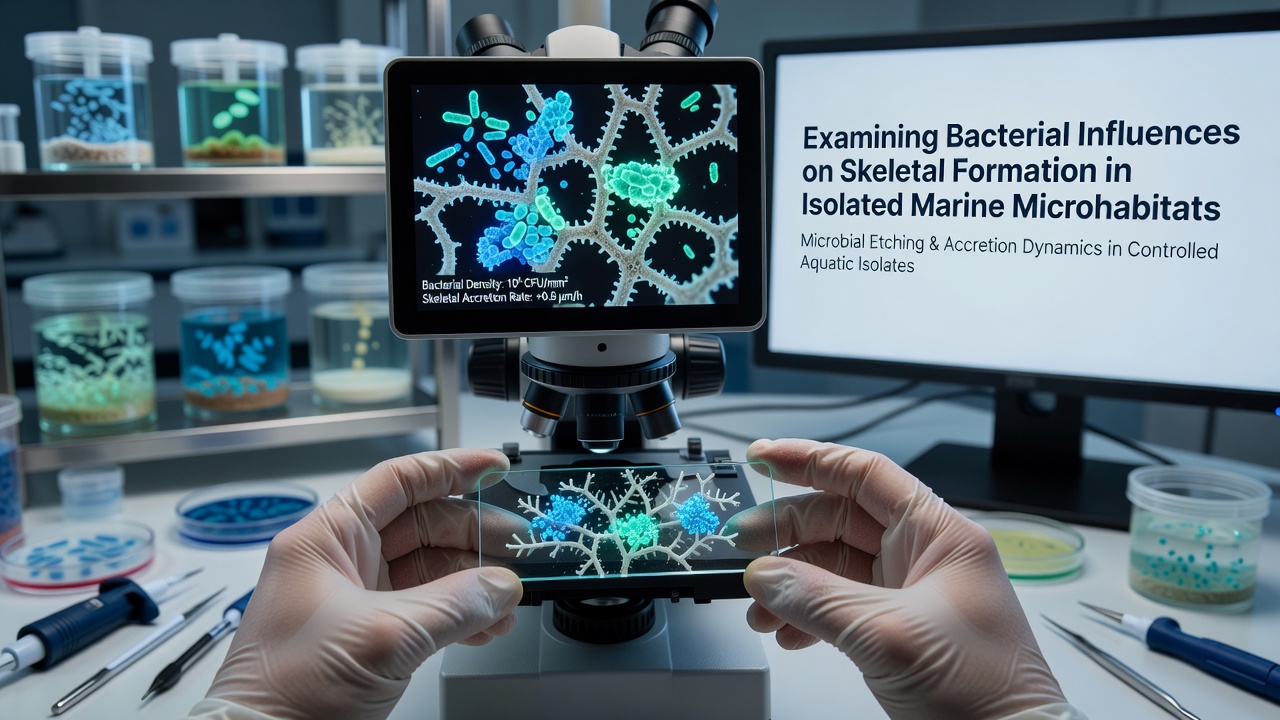
Researchers employ microsensor arrays, high-resolution imaging, and metagenomic sequencing to quantify bacterial activity and skeletal growth within intact microhabitats. Microsensors inserted into sediment cores record simultaneous changes in pH, oxygen, and calcium at sub-millimeter scales, while synchrotron-based X-ray tomography captures three-dimensional crystal textures associated with specific bacterial taxa. Data sets compiled from repeated sampling campaigns show that microhabitats dominated by anoxygenic phototrophs exhibit faster initial crystal nucleation yet produce more porous skeletal structures compared with those dominated by aerobic heterotrophs.
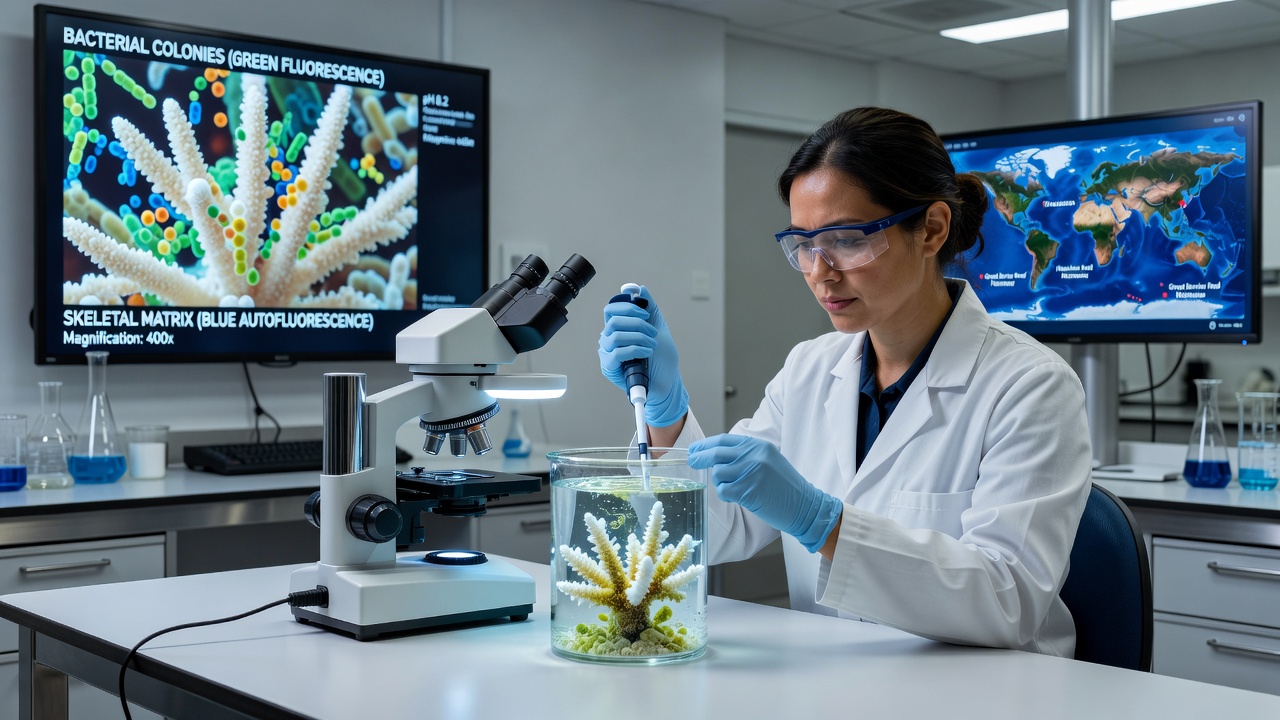
Long-term monitoring programs report that bacterial community composition correlates strongly with seasonal temperature anomalies. During the 2025 monitoring cycle, sites experiencing prolonged warm-water periods displayed increased relative abundance of taxa linked to enhanced calcification rates, although net skeletal accretion remained variable because of concurrent increases in dissolution under lower pH. As of September 2026, expanded sensor networks deployed by collaborative programs continue to track these patterns across additional microhabitat types.
Comparative Data Across Regions
Comparative studies between Australian shelf environments and temperate Atlantic basins illustrate how latitude and water chemistry interact with bacterial metabolism. According to records maintained by the Australian Institute of Marine Science, tropical microhabitats support higher bacterial diversity yet display narrower ranges of calcification response, while cooler Atlantic sites exhibit lower diversity but greater variability in skeletal density tied to seasonal nutrient pulses. Parallel investigations coordinated through European marine research networks document similar trends, confirming that bacterial mediation of carbonate chemistry operates consistently across biogeographic provinces even when species assemblages differ.
These regional comparisons also highlight the role of sediment grain size and organic matter quality in shaping bacterial influence. Finer sediments retain more labile carbon and sustain denser biofilms, resulting in stronger local control over pH and saturation state. Coarser sediments permit greater diffusive exchange and therefore dilute bacterial effects, allowing external water chemistry to exert greater control over skeletal formation.
Conclusion
Evidence accumulated to date demonstrates that bacterial communities within isolated marine microhabitats exert measurable control over skeletal formation through chemical and structural mechanisms that vary with environmental context. Continued integration of genomic, geochemical, and imaging approaches will refine understanding of these interactions and clarify how microhabitat-specific processes scale to broader reef and sediment systems.