Willa Müller · 17 September 2026
Coral Pigment Shifts Tied to Feeding Schedules in Benchtop Marine Replicas
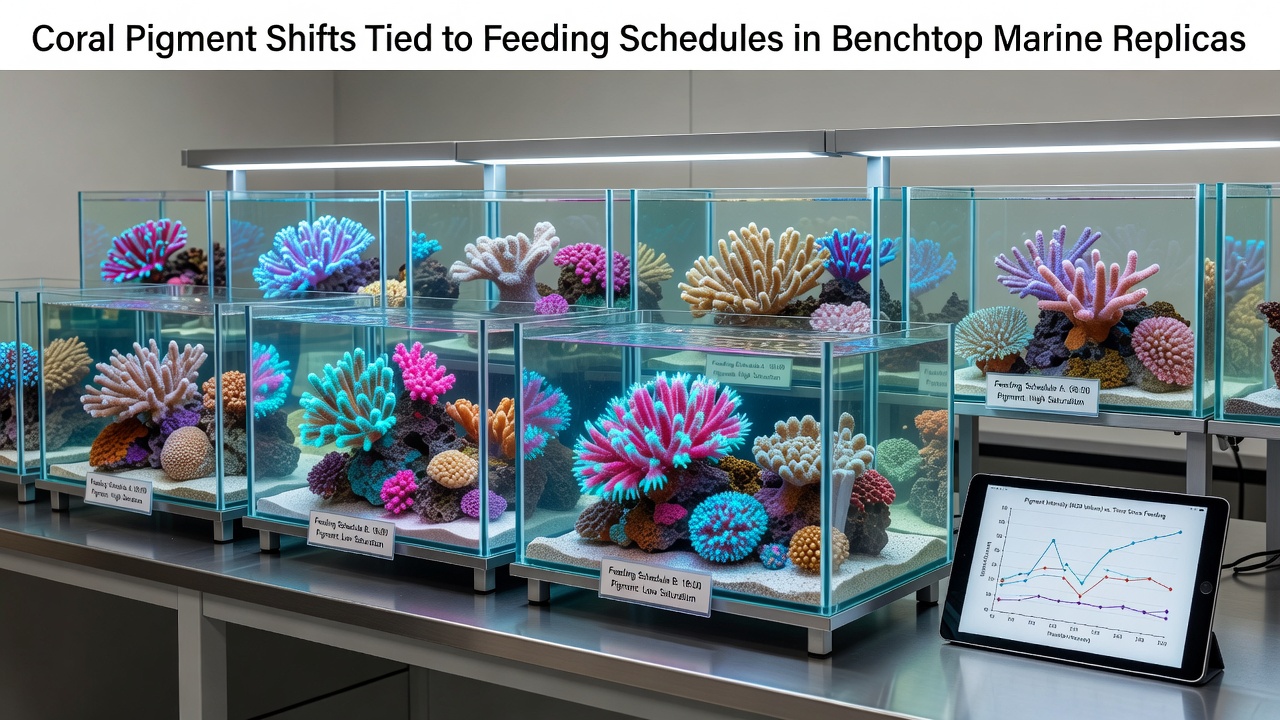
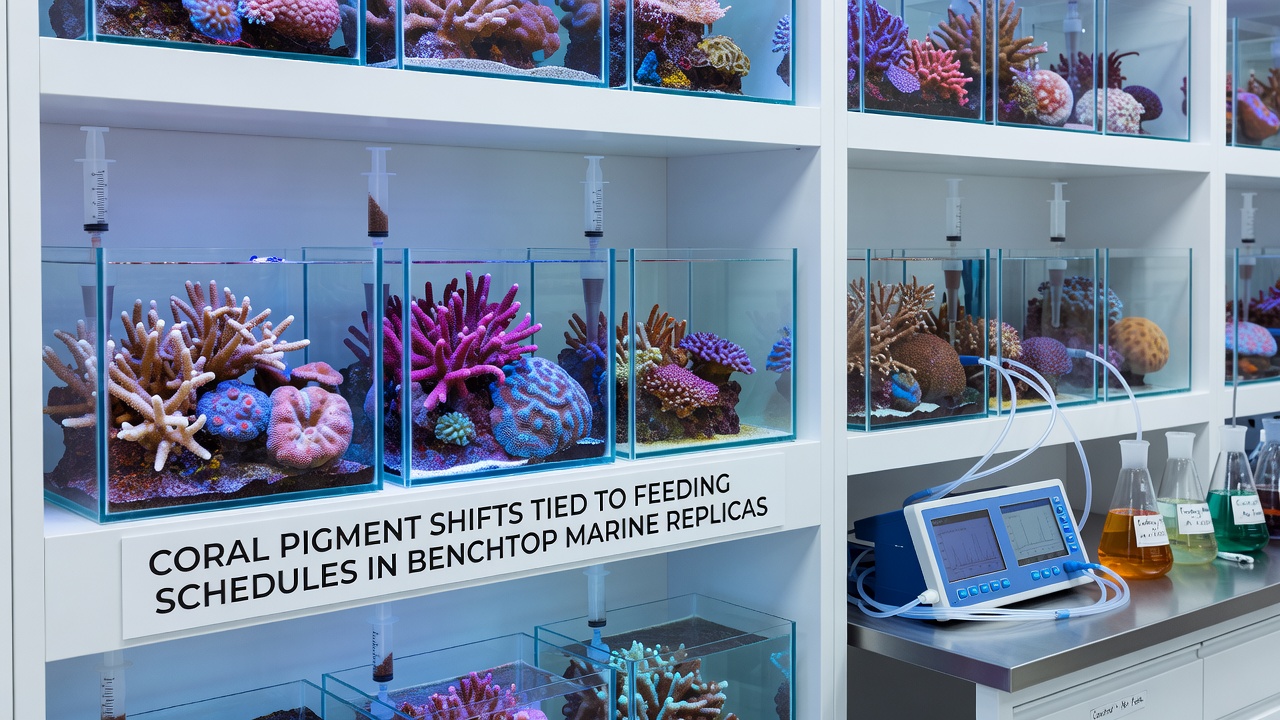
Researchers track pigment variations in corals housed within compact aquarium systems that replicate reef conditions at small scales. These benchtop marine replicas allow precise manipulation of variables such as light cycles, nutrient inputs, and food delivery intervals while maintaining stable salinity and temperature parameters. Studies document how adjustments to feeding frequency correlate with measurable changes in coral coloration that stem from shifts in symbiotic algae density and host-derived fluorescent proteins. Benchtop systems typically feature volumes between 20 and 50 liters and support multiple coral fragments from genera including Acropora and Pocillopora. Operators deliver live or prepared feeds at intervals ranging from daily to once every three days and monitor resulting color metrics through spectrometry and photographic analysis. Data collected across multiple facilities indicate that corals receiving consistent daily rations exhibit elevated chlorophyll concentrations during the initial four weeks of observation while those on reduced schedules display progressive paling that reverses upon schedule normalization.Mechanisms Linking Nutrition and Pigmentation
Symbiont algae housed within coral tissues adjust their photosynthetic output in response to available nitrogen and phosphorus from external food sources. When feeding occurs at regular intervals the algae maintain higher densities that produce deeper brown and green hues whereas sporadic schedules prompt expulsion or reduced reproduction of these symbionts leading to lighter tissue tones. Host corals simultaneously regulate production of green fluorescent protein and other chromoproteins that contribute to overall appearance and may serve photoprotective roles under varying irradiance levels.
One research team operating multiple replica units recorded chlorophyll a levels rising 18 percent in fragments fed twice daily compared with those fed every 48 hours over an eight-week period. Spectroscopic readings taken at consistent times each morning captured these shifts while parallel measurements of tissue nitrogen content confirmed elevated nutrient assimilation in the more frequently fed groups. The same dataset revealed that Pocillopora damicornis fragments regained original coloration within 11 days after researchers restored daily feeding following a three-week restriction period.
September 2026 Findings from Multi-Site Trials
During September 2026 several laboratories synchronized protocols across facilities in the United States and Australia to test standardized feeding regimens in identical replica designs. Preliminary reports from those coordinated runs show that corals exposed to automated feeders delivering micro-pellets at dusk each day maintained stable pigment profiles whereas groups fed at irregular morning intervals displayed increased variability in red fluorescent protein expression. Australian Institute of Marine Science personnel contributed growth rate measurements that aligned with pigment stability patterns observed in the North American cohorts.
Additional observations noted that elevated feeding frequency sometimes coincided with minor increases in mucus production which researchers quantified through collection traps placed beneath each fragment. This mucus layer appeared to influence light penetration and may have contributed to the observed pigment retention in daily-fed specimens. Cross-site comparisons further indicated that water flow rates above 15 centimeters per second mitigated some of the paling effects seen under lower-flow conditions regardless of feeding interval.
Measurement Techniques and Data Patterns
Technicians rely on non-invasive methods including pulse-amplitude modulated fluorometry and red-green-blue image analysis to quantify pigment changes without disturbing the corals. Weekly sampling of a subset of fragments allows extraction of total protein and carotenoid content for laboratory verification of the non-destructive readings. Aggregated results from 14 replica tanks demonstrate that a 24-hour feeding cycle produces the narrowest range of color variation while 72-hour intervals generate the widest spread in hue values.
Researchers also track recovery trajectories after intentional schedule disruptions. Fragments that experienced a sudden shift from daily to weekly feeding lost approximately 25 percent of initial fluorescence intensity within 14 days yet regained baseline levels after three consecutive weeks of resumed daily rations. These recovery timelines proved consistent across two different coral species tested in the same replica arrays.
Conclusion
Controlled experiments in benchtop marine replicas continue to clarify connections between feeding schedules and coral pigment dynamics through repeated measurements of symbiont populations and host proteins. Coordinated work conducted through September 2026 has expanded the available datasets and highlighted the importance of consistent nutrient delivery intervals for maintaining stable coloration metrics. Ongoing refinement of automated feeding systems and monitoring protocols supports further investigation into how these small-scale findings translate to larger aquarium and field contexts.