Zoe Lorenz · 3 September 2026
Analyzing Symbiont Density Variations in Acropora Species Within Controlled Aquarium Conditions
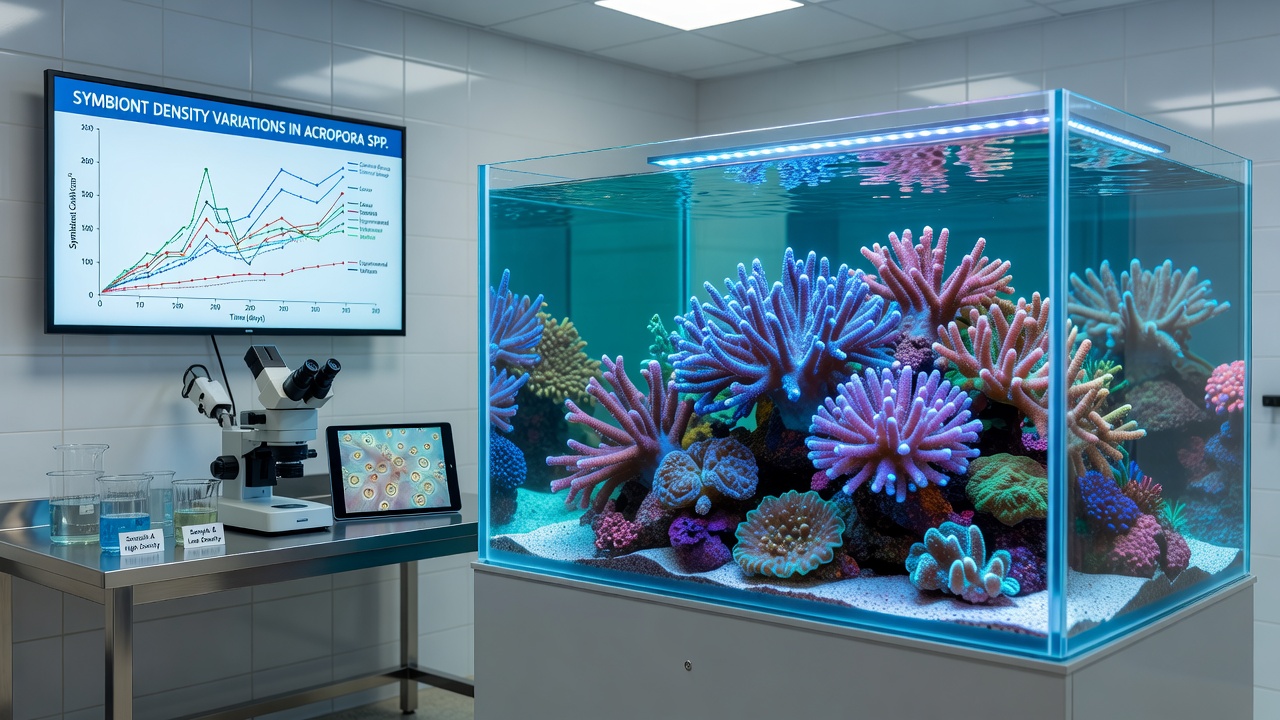
Researchers track symbiont density in Acropora corals inside closed aquarium systems because these dinoflagellates supply the majority of the host's energy through photosynthesis, and any shift in their numbers signals changes in light intensity, nutrient availability, or temperature stability. Observers note that Acropora species such as A. millepora and A. tenuis respond quickly to small alterations in water chemistry, which makes them useful models for studying how symbiotic partnerships adjust under repeatable laboratory conditions.
Methods Used in Controlled Studies
Teams collect small fragments from parent colonies, mount them on plugs, and place them in recirculating systems that maintain consistent salinity between 34 and 36 parts per thousand while holding temperature within 0.2 degrees Celsius of the set point. They measure symbiont density by homogenizing tissue samples, counting cells with a hemocytometer or automated flow cytometer, and normalizing the counts to surface area or protein content. Data collected over multiple weeks reveal how density fluctuates with daily light integrals ranging from 4 to 12 mol photons per square meter per day, and these measurements feed into statistical models that separate the effects of individual variables.
Factors That Influence Density Shifts
Light spectrum and intensity produce the clearest patterns, yet nutrient ratios also matter because elevated nitrate levels above 5 micromolar often increase symbiont numbers while phosphate limitation keeps populations in check. Temperature experiments conducted between 26 and 30 degrees Celsius show that short-term warming can elevate mitotic indices before bleaching thresholds appear, and researchers document recovery trajectories once conditions return to baseline. Flow rates inside the tanks further modulate results, since higher water movement improves gas exchange and prevents boundary-layer effects that would otherwise reduce photosynthetic efficiency.
One long-running project at an Australian research facility compared three Acropora genotypes under identical photoperiods and found that peak symbiont densities occurred at slightly different light levels for each genotype, indicating genetic variation in photoacclimation capacity. Similar work in North American laboratories has tested the addition of trace metals such as iron and manganese, revealing modest density increases when these elements remain within natural seawater ranges.
Recent Observations from September 2026
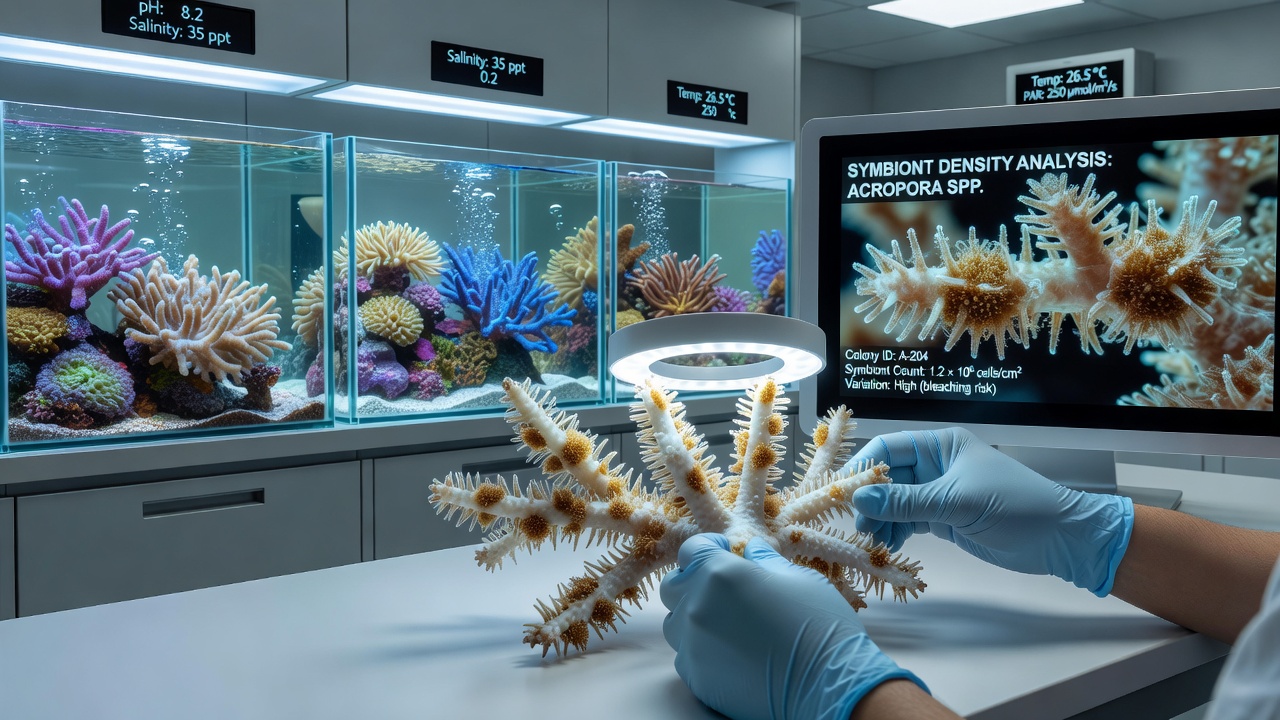
During September 2026, several aquarium-based monitoring networks released datasets that tracked symbiont density across more than 200 Acropora fragments held at five separate institutions. The compiled records show that average densities ranged from 1.2 to 2.8 million cells per square centimeter, with the lower values appearing in tanks that experienced brief power interruptions affecting LED arrays. Analysts cross-referenced these numbers with continuous logger data for temperature, pH, and photosynthetically active radiation, then applied mixed-effects models to isolate the contribution of each parameter.
Analytical Techniques and Data Interpretation
Flow cytometry distinguishes live from compromised symbionts by staining with fluorescent dyes, which allows researchers to calculate the proportion of functional cells rather than relying solely on total counts. Chlorophyll fluorescence measurements obtained with pulse-amplitude modulated devices provide a non-destructive proxy that correlates strongly with direct cell counts when calibration curves are updated regularly. Statistical packages commonly used include R and Python libraries that handle repeated measures and account for tank effects as random variables, producing confidence intervals that help determine whether observed density changes exceed normal biological variation.
Implications for Aquarium Management
Aquarists who maintain public displays or breeding programs apply these findings when they adjust lighting schedules or perform water changes, because maintaining stable symbiont populations supports long-term coral health and reduces the frequency of interventions. Institutions that share standardized protocols through collaborative databases report improved reproducibility across sites, which strengthens the reliability of comparative studies. Continued refinement of sensor networks and automated dosing systems should further reduce the variability introduced by manual adjustments.
Conclusion
Controlled aquarium experiments continue to supply detailed records of how symbiont density in Acropora species responds to measurable environmental cues, and the September 2026 datasets add another layer of temporal resolution to these records. The combination of direct cell counts, fluorescence proxies, and multivariate statistics allows researchers to quantify the relative importance of light, nutrients, and temperature while minimizing confounding factors inherent in field studies. These accumulating observations support improved husbandry practices and contribute to broader efforts aimed at preserving coral resilience under changing oceanic conditions.